
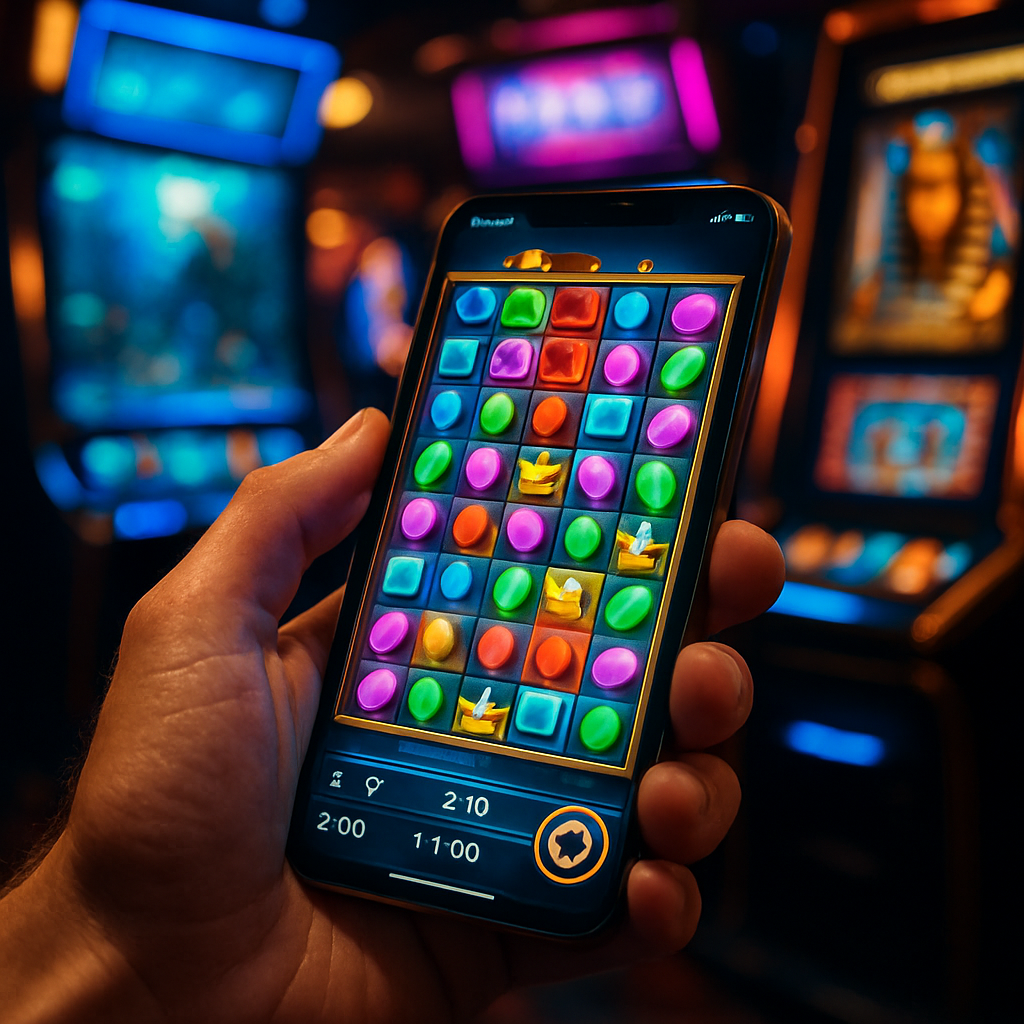
Side bets have developed from a fringe novelty into one of the most impactful elements defining how players experience table games and live dealer lobbies today https://wishocasino.es/. A well-designed side bet does more than just add a button to the screen — it redefines risk, reward, and decision pace. For Spanish players evaluating where to play, understanding what separates a forgettable side bet from a authentically exciting one can change how they tackle blackjack, roulette, baccarat, and game-show hybrids. The difference often comes down to mathematical transparency, thematic integration, payout architecture, and how effortlessly the option integrates with the main game flow without disrupting rhythm or bankroll discipline. This article analyzes those structural differences and ties them to what players find on a current platform like Wisho Casino, where side bet variety is treated as a key component of the table game identity rather than an afterthought.
Mathematical Structure and House Advantage Transparency
The core of any side bet is its basic probability model, and strong ones distinguish themselves by delivering a reasonable trade-off between volatility and long-term expected value. A side bet with a house edge above 10 or 12 percent might deliver dramatic moments, but it systematically erodes a bankroll faster than the main game. The strongest side bets generally keep the house edge in a range near 3 to 7 percent, still profitable for the operator but survivable for the player over extended sessions. Clear providers publish theoretical return-to-player percentages for their side bet menus, and Spanish-facing platforms that carry approved content from Evolution, Pragmatic Play, or Playtech give players access to those figures. Before putting chips on a side bet square, a smart player verifies whether the paytable rewards specific hand compositions with odds that match their true rarity, or whether the payout steps have been compressed to mask a steep built-in advantage.
What makes the mathematics tolerable in practice is how the payout table distributes rewards across probability tiers. A great side bet does not just provide one enormous jackpot at the tail end of a near-impossible outcome; it creates intermediate payout levels that trigger often enough to sustain engagement. In Perfect Pairs blackjack, for instance, a mixed pair pays 5:1 or 6:1 based on the variant, a coloured pair pays higher, and a perfect suited pair delivers the top prize. That graduated structure means a player sees small returns with enough regularity to feel the feature is alive, rather than waiting for a statistical miracle. The same principle holds true to roulette side bets that pay incremental multipliers for covering specific neighbour zones or Lucky Ladies blackjack bets where any twenty hand returns something, but a suited twenty with two queens unlocks the headline figure. When intermediate hits exist, the side bet becomes a rhythm element rather than a pure lottery ticket.
Licensing Credibility and Audited Fairness
A additional bet’s allure disappears right away if the gambler does not trust that its advertised odds align with the core randomness. Regulatory approval plays a role here in a tangible way: independent testing labs such as eCOGRA, iTech Labs, or GLI confirm that each additional bet resolves in line with the stated probabilities and that the random number generation has no exploitable bias. Casinos targeting Spain licensed under respected authorities — typically Malta, Gibraltar, or under the authority of Spain’s Dirección General de Ordenación del Juego — must send their game portfolios for certification. The presence of that approval means the Lucky Ladies return you find on the felt reflects a verified mathematical model, not a marketing claim.
For the player, the practical question is if the casino displays audit seals and offers access to game-specific RTP information. A growing number of live dealer interfaces now embed an data panel that shows the expected return for each additional bet, updated in real time only if certified by the provider. Wisho Casino holds a recognized international license and offers games from developers whose side bet mathematics are verified as part of the studio’s compliance package. This two-tier assurance — site license plus developer certification — is the core assurance that a 2,000x multiplier in Lightning Roulette is actually achievable at the advertised https://www.marca.com/futbol/futbol-internacional/2024/07/24/66a04b3246163f21478b457d.html probability and not a visual effect that never pays out. Gamblers who grasp this validation layer tend to view side bets with more confidence and a clearer sense of the risk-reward proposition they are agreeing to.
Thematic Cohesion and Narrative Appeal
Side bets that utilize a coherent theme or design motif do more than improve aesthetics — they cause the rule easier to remember and the outcome more satisfying to observe. When the side bet is named after a narrative component, like Lucky Ladies pointing to the Queen of Hearts or Dragon Bonus in baccarat evoking a margin-of-power narrative, the player develops a mental anchor that speeds up the acquisition process. That fixing diminishes the hesitation new players encounter when presented with an unknown betting square. A Spanish-speaking player who recognises “Perfect Pairs” right away comprehends that pairs are the objective, and the adjective “Perfect” tells them the top prize necessitates suited matching. Thematic naming functions as a streamlined manual, and top providers invest heavily in harmonizing the graphic display with the label so the association resonates in seconds.
Gaming halls that organize side bet-rich tables under a coherent design umbrella further strengthen this influence. Evolution’s Lightning series uses a uniform black-and-gold visual language and striking sound cues that announce multiplier events regardless of whether the base game is roulette, blackjack, or baccarat. A player moving from Lightning Roulette to Lightning Blackjack on Wisho Casino’s platform carries forward the assumption that random multipliers will hit selected positions, and the recognition generates confidence. This thematic continuity is not just a branding exercise; it practically cuts cognitive load and stimulates exploration across game types. A Spanish audience that appreciates intuitive design and quick navigation in a mobile-first environment will detect the difference between a scattered wager menu and a carefully chosen set where each feature feels like part of a series.
Embedding with Core Game Decisions
The finest elegant side bets appear like an organic extension of the main hand rather than a disconnected gamble bolted onto the interface. In blackjack, the 21+3 side bet illustrates this integration by using the dealer’s upcard and the player’s first two cards to form a three-card poker hand. The player is already evaluating those three cards to make a hitting or standing decision, so the side bet simply provides a second layer of interpretation to the same information. That cognitive overlap reduces the sense of playing two unrelated games simultaneously. Similarly, baccarat side bets that score the player and banker hands for specific paired outcomes or margin-of-victory patterns re-use cards already in play. When the trigger conditions for a side bet are extracted from data the player naturally processes, the feature boosts immersion instead of splitting attention.
Poorly conceived side bets fall short this test by introducing external randomisers that have nothing to do with the game state. A blackjack side bet that resolves based on a separate wheel spin or a hidden multiplier disconnected from the dealt cards can appear jarring and arbitrary. Spanish players who frequent live dealer lobbies tend to gravitate toward tables where the side bet narrative aligns with the game they came to play. Wisho Casino’s live casino section, stocked with Evolution titles, shows this understanding clearly. Games like Lightning Blackjack and Lightning Roulette weave multiplier side bets directly into the turn of cards or the fall of the ball, ensuring the extra wager magnifies the core event rather than distracting from it. That design philosophy defines the boundary between a side bet that deepens a session and one that merely inflates the cost per round.
Payout Architecture and the Multiplier Effect
Multiplier-driven side bets have redefined expectations across the market over the last five years, largely because they introduce asymmetric upside without demanding the player to forecast a specific rare outcome. In Lightning Roulette, the core bet maintains standard roulette payouts, but a side bet element enters when one to five numbers are hit by random multipliers ranging from 50x to 500x before the spin. The player does not have to achieve a niche combination — they simply need their straight-up number to align with a lightning strike. That model retains the familiar roulette decision structure while injecting the possibility of an outsized return on a single chip. The genius resides in how the multiplier is determined before the ball is released, making the anticipation visible and shared among all players at the table.
Traditional fixed-payout side bets depended on rarity alone to create excitement, but modern multipliers transfer the appeal toward visible potential. Game-show formats such as Crazy Time, Dream Catcher, and Monopoly Live carry the logic further by layering side bet opportunities into bonus rounds where multipliers accumulate. A Spanish player who places the standard bet plus the applicable side bonus on Crazy Time’s four bonus games is essentially entering a nested multiplier ecosystem. The structure counts because it alters the psychological profile of the wager: instead of seeking a single fixed jackpot, the player is participating in a process where each spin of the bonus wheel can raise the payout beyond what a static paytable could offer. Platforms like Wisho Casino have accepted this multiplier-first philosophy, ensuring the side bet catalogue in their live lobby features both fixed-payout classics and multiplier-charged contemporary variants.
Variance Analysis and Bankroll Compatibility
Not every side bet suits every bankroll, and great side bets distinguish themselves by communicating their volatility level sufficiently that players can make knowledgeable judgments without advanced statistics. A side bet that payouts only on a perfect pair in a six-deck blackjack shoe occurs roughly once every 56 hands on average, which results in long dry spells. That is a high-volatility proposition. In contrast, a side bet that payouts on any pair — mixed, coloured, or perfect — occurs closer to once every 15 hands, lowering the variance. Spanish players who prefer steady, dialogue-heavy sessions at the live tables often lean toward intermediate-frequency side bets that sustain engagement without requiring deep pockets to endure the gaps between wins. High-volatility options appeal to a different profile: those who view the side bet as a low-cost lottery overlay on top of standard strategy.
The responsible way to handle this is to size the side bet chip relative to the main bet in proportion to its volatility. A pragmatic guideline often shared by experienced table game players is to dedicate no more than one-fifth to one-tenth of the main bet unit to a side bet with high variance, keeping the primary game action the centre of gravity. Platforms that provide flexible chip denominations enable this granular control possible. Wisho Casino’s live tables, which cover a broad bet limit spectrum, let players fine-tune side bet exposure to fit their session budget, whether they are exploring low-stakes roulette or higher-limit blackjack. The key is that the side bet should never cause a deviation from basic strategy in the main hand. A side bet that tempts a player to misplay a blackjack hand to pursue its payout has crossed from entertainment into liability, and the best-designed options sidestep that conflict by activating independently of player decisions.
Device Performance and Mobile-Priority UX
A side bet that appears stunning on a desktop but transforms into a crowded, error-prone neglected element on a smartphone undermines its own value, particularly in Spain where mobile casino traffic prevails. The spatial arrangement of the side bet button, its size relative to the main bet spots, and the readability of its payout information at lower screen resolutions all dictate whether the feature sees action or overlooked. Great side bet designs locate the betting area alongside the player’s standard bet position, with a distinct icon and a clickable zone sufficiently big for thumb accuracy on a 6.1-inch screen. They also display the current payout structure in a foldable but readily available overlay, not buried three menus deep. Evolution’s mobile-optimised interface, which Wisho Casino implements across its live tables, standardises side bet placement so that players acquire muscle memory across different games.
Performance considerations reach past layout to how the side bet outcome is rendered. A side bet resolution that needs a separate heavy animation stream can cause latency on older devices or slower connections, disrupting the table rhythm. The best designs utilize efficient visual cues — a accented border, a chip stack animation, a brief text banner — to communicate results without taxing the device’s graphics pipeline. Spanish players on mid-range Android devices make up a significant portion of the mobile audience, and clean performance on those handsets is a real-world necessity. The lack of lag or interface clutter around side bet features is one of the quiet markers of a established platform. It indicates the player that the operator assessed the experience under real-world conditions, not just on a high-spec development rig.
Promotional Suitability and Marketing Positioning
Side wagers fill a special role in the relationship between betting obligations and bonus money. Many sign-up bonuses and subsequent offers apply contribution weightings that differ by game type, and side wagers sometimes sit in an vague zone. Some platforms leave out additional bet sums fully from playthrough progress, while others consider them at a diminished rate or cap eligible side bet amounts. Superb additional bet experiences are matched by transparent, precise conditions that the user can access before depositing. When the terms are unclear, a player can inadvertently void a bonus by centering play on qualifying additional bets that the system later ignores during the playthrough check. Clear operators position this information in the bonus terms section and often mark it in the game interface hint.
Aside from constraints, the clever structuring of additional bets within campaign structures can raise them from supplementary option to session-defining feature. Temporary offers that offer a refund on a streak of failed additional bets, or contests that score gamblers based on multiplier wins obtained, convert the side bet into an event layer. Spanish users at Wisho Casino can encounter rotating promotions that directly feature table game side wagers during focused live gaming weeks, where scoreboards monitor largest multiplier wins across Lightning Blackjack or Crazy Time bonus rounds. This integration acknowledges the side wager’s function as a unique mechanic rather than handling it as an uniform wager. When a platform designs its promotional calendar around the structural features that make side bets thrilling — fluctuation spikes, multiplier limits, visual drama — the effect is a unified user experience rather than a disjointed set of unrelated promotions.
Table Dynamics and the Social Interaction
Additional bets also transform the social texture of live dealer tables in ways that are often unnoticed until they are absent. When a few players at a blackjack table put 21+3 or Perfect Pairs side bets, every hand becomes a collective moment of resolution before the main game moves on. The dealer typically resolves side bets first and declares results aloud, generating a wave of reactions that goes around the table. This communal moment — groans at a near-miss, cheers at a coloured pair — adds a rhythmic pulse that holds the chat box active and the session atmosphere upbeat. Spanish live casino culture, with its strong inclination for conversational, dealer-led environments, amplifies this effect. A table without side bets is quieter, more mechanically; a table with well-chosen, fast-resolving side bets generates more frequent interaction peaks.
The dealer’s role in this rhythm is important. Excellent side bets are those dealers can adjudicate rapidly, without awkward pauses or manual overrides that break eye contact and flow. Evolution’s training and interface design guarantee that side bet outcomes are processed and highlighted instantly on the UI the dealer sees, allowing a smooth verbal call-out. The resulting speed keeps the game’s tempo tight, which Spanish players accustomed to efficient mobile sessions value. A side bet that slows the game by requiring a lengthy manual resolution process — some legacy poker-based side bets struggle from this — is more and more filtered out by player preference. The social dimension ultimately benefits side bets that are fast, visual, and easy to announce, because they turn an individual wager into a collective moment without costing the table its momentum.
What distinguishes great casino side bets apart is not a single design trick but a cluster of decisions that respect mathematics, interface clarity, regulatory trust, and the human rhythm of play. Spanish players who navigate the table game lobby with an eye for graduated paytables, mobile-optimised button placement, transparent RTP data, and side bets that amplify rather than disrupt the core game will derive far more value from their sessions. The catalogue available at Wisho Casino, built around certified, multiplier-rich Evolution and Pragmatic Play titles, demonstrates this integrated philosophy. It views side bets as a strategic layer of entertainment rather than an opportunistic afterthought. The next step for any player is simple: choose a table where the side bet adds a clear, verifiable dimension to the game you already enjoy, size the stake to match its volatility, and let it add to the table’s rhythm rather than dominate it. That discipline turns a marginal add-on into one of the most rewarding parts of modern live casino play.

